September 20, 2026
Why Candles Soot (And How to Stop It)
Black smoke and gray jar rims have simple causes. Here's why candles soot, and the easy fixes that stop it.
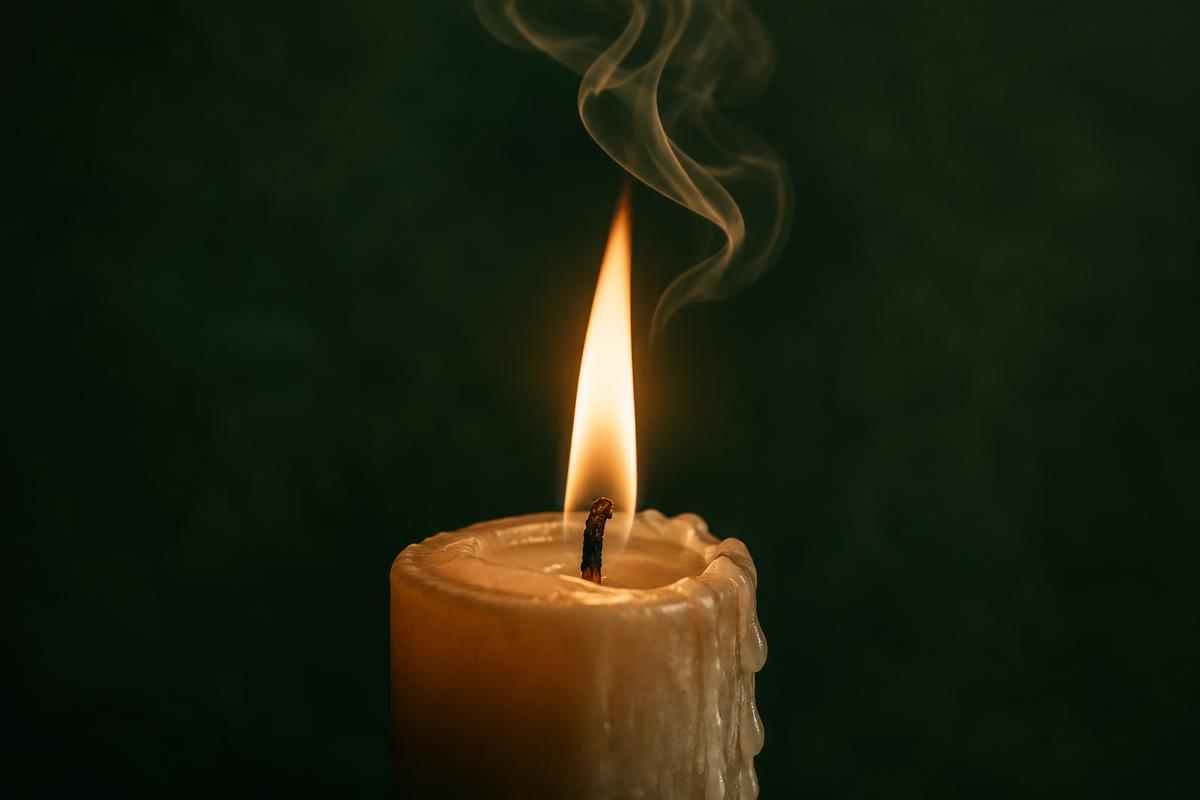
If you've ever wondered why candles soot, the answer is almost always the flame, not the candle being "bad." Soot is tiny bits of carbon that didn't fully burn. A calm, steady, teardrop-shaped flame burns cleanly. A tall, flickering one doesn't.
Cause 1: The wick is too long
This is the big one. A long wick pulls up more fuel than the flame can burn, so the extra escapes as black smoke. Trim to about 1/4 inch before every burn.
Cause 2: Drafts
Air moving across the flame makes it flicker and stretch, which interrupts clean burning. Move the candle away from vents, ceiling fans, open windows, and doorways.
Cause 3: Mushrooming
After a long burn, carbon can build up on the tip of the wick in a little ball, like a mushroom cap. It makes the flame larger and sootier. Trim it off once the candle has cooled.
Cause 4: Burning too long
After about four hours, wicks tend to lengthen and mushroom. Keep burns to four hours or less.
Cause 5: Debris in the wax
Matches, wick trimmings, and dust in the melt pool can act like extra wicks. Keep the surface clean.
Cause 6: Wax and fragrance load
Some wax blends and very heavy fragrance loads are more prone to smoking, especially if the wick isn't well matched to the jar. Well-made candles are tested with the right wick size for their wax and container.
Cleaning soot off the jar
Once the candle is cool, wipe the inside rim with a dry paper towel or a slightly damp cloth. Don't wipe while the wax is melted.
The short version
Trim the wick, stop the drafts, and keep burns under four hours. That solves nearly every sooty candle.
The Scent Librarian
Describe the vibe. We'll check out the right book.
Tell us your mood, the room, and what your nose likes. Our AI librarian pulls three candles from the stacks and explains why.
Your recommendations will appear here.