September 21, 2026
Are Paraffin Candles Bad?
Paraffin gets a bad reputation online. Here is a balanced look at the evidence, the tradeoffs, and why we use a coconut-paraffin blend.
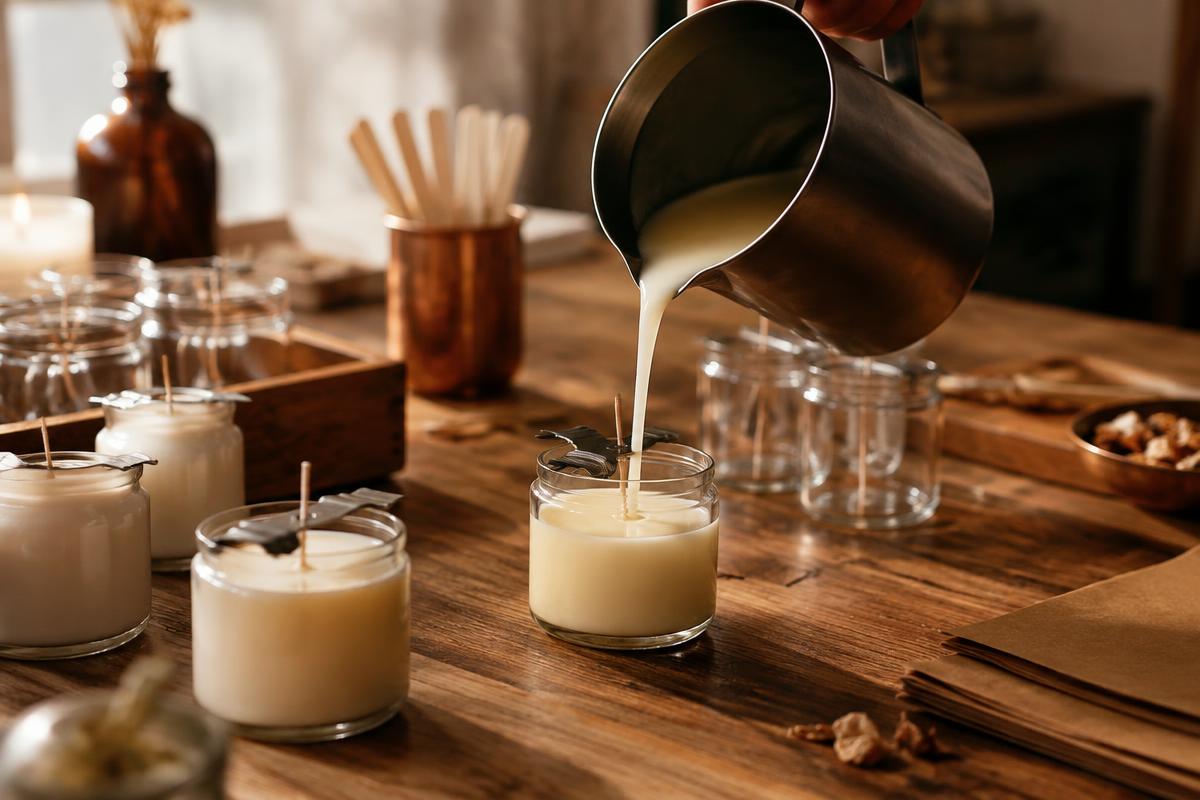
Search "are paraffin candles bad" and you'll find strong opinions in both directions. The honest answer is more nuanced than a simple good-wax, bad-wax label.
What paraffin is
Paraffin wax is produced during petroleum refining. Candle makers are using a material that already exists within that larger industry; choosing candle wax does not determine whether oil is extracted. We would rather put an existing material to useful, beautiful work than pretend another wax has no environmental footprint.
What the research actually says
Any candle is a small flame, and any flame can produce soot and other emissions when combustion is incomplete. Wax, fragrance, wick, airflow, burn time, and how well the candle was tested all affect what happens in the jar. That is why a properly sized wick, a steady flame, a trimmed wick, and sensible burn times matter.
People with asthma, allergies, or scent sensitivities may notice any candle more, regardless of wax, and may prefer to burn candles in well-ventilated rooms and for shorter periods.
Soy is not impact-free
Soy starts with a renewable crop, but turning soybean oil into candle wax still requires agriculture and industrial processing. Land use, farming inputs, oil extraction, transport, and hydrogenation all belong in an honest environmental comparison. The exact impact depends on how and where each material is produced, so "plant-based" alone does not settle the question.
We do not believe switching our small-batch candles to soy would stop petroleum extraction, nor do we think it would make every environmental tradeoff disappear.
The wax we actually use
Doors at 7 Co. candles are made with IGI 6046, a coconut-paraffin blend designed for container candles. We chose it because it works beautifully with our detailed fragrances and hand-marbling: the paraffin helps carry scent and color consistently, while the coconut component contributes to the blend's smooth, creamy finish.
The result is strong cold and hot scent throw, a stable container candle, and a wax surface that suits the one-of-a-kind patterns we pour by hand. Performance is not an afterthought for us; it is part of making a candle worth bringing into your home.
So, are paraffin candles bad?
"Paraffin is bad and soy is good" is too simple to be useful. Both materials have environmental costs, and every burning candle should be used thoughtfully. We are transparent about our coconut-paraffin blend because it gives us the scent performance, finish, and marbling quality we want without making claims the evidence cannot support.
Whatever wax you choose, burn it well: trim the wick to ¼ inch, avoid drafts, stop after four hours, and give the room some ventilation.
The Scent Librarian
Describe the vibe. We'll check out the right book.
Tell us your mood, the room, and what your nose likes. Our AI librarian pulls three candles from the stacks and explains why.
Your recommendations will appear here.